Before the Algorithm: What Pre-Google Research Habits Can Still Teach Modern Searchers
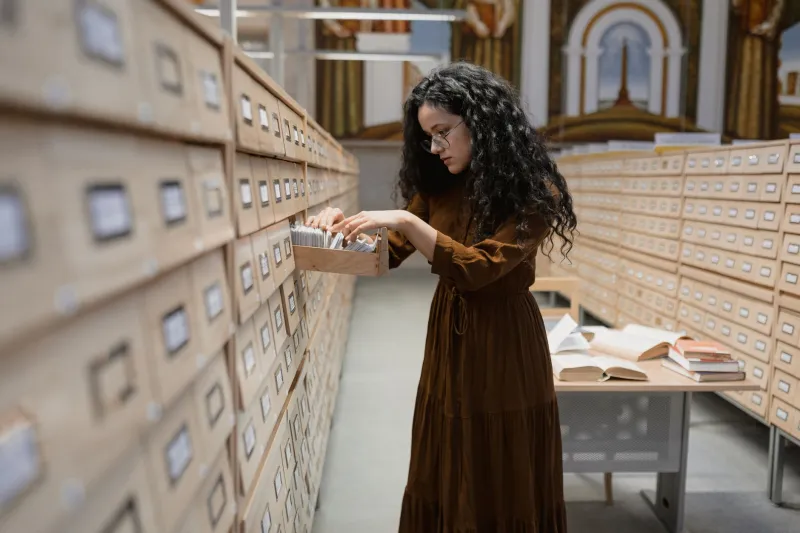
There is a quiet irony embedded in the modern search experience. Despite having access to more indexed information than any previous generation in human history, many Americans struggle to find precisely what they need. Searches return dozens of marginally relevant results. Nuanced questions get flattened into keyword matches. And the deeper the inquiry, the more frustrating the experience tends to become.
The solution, according to a growing number of librarians and information professionals, may lie not in a newer tool or a smarter algorithm—but in a set of research habits that predate the internet entirely.
The Card Catalog as a Lesson in Structured Thinking
For most of the twentieth century, the card catalog was the primary gateway to recorded knowledge in American public and academic libraries. Each physical card contained a controlled vocabulary of subject headings—standardized terms that librarians had carefully assigned to every item in a collection. To use the catalog effectively, a researcher had to think in categories, not just keywords.
That distinction matters more than it might appear. When you type a phrase into a modern search bar, you are essentially guessing which words a webpage happens to use. The card catalog, by contrast, forced researchers to identify the conceptual category their question belonged to—a discipline that produced far more precise results.
"People who grew up using card catalogs learned to ask, 'What is this topic actually called, and how is it organized?'" says one reference librarian at a large Midwestern public library system. "That cognitive step—pausing to classify before you search—is something we rarely teach anymore, and its absence shows up constantly in the questions patrons bring to us."
The Library of Congress Subject Headings system, which underpinned most American card catalogs, still exists and still governs how academic databases organize their holdings. Researchers who take ten minutes to consult those controlled vocabularies before running a database search routinely surface materials that keyword searches miss entirely.
Newspaper Archives and the Art of Temporal Searching
Before digital aggregation, following a story over time required physically visiting a library's periodical room and working through bound volumes or microfilm reels of newspapers. The process was slow, but it built a skill that many contemporary searchers lack: the ability to situate information within a specific moment in time.
Modern search engines generally surface the most recent or most-linked content. Historical context collapses. A researcher looking into, say, the economic conditions of a particular American city in the 1970s will find that a standard search engine is a poor instrument for the job—not because the information doesn't exist online, but because the search interface is not designed to privilege temporal specificity.
Newspaper archives trained earlier researchers to think in timelines. They learned to ask not just what happened but when, and to understand that the meaning of an event shifts depending on which documents you consult and from which moment. That temporal discipline translates directly into better digital searching—specifically, into using date-range filters, accessing archived versions of websites, and consulting digitized newspaper databases such as those available through ProQuest or the Library of Congress's Chronicling America project.
Librarian Networks and the Value of Human Intermediaries
Perhaps the most underappreciated research resource in pre-digital America was the reference librarian. These professionals operated as human search engines—but with a critical advantage over their algorithmic successors: they could ask clarifying questions.
A patron arriving at a reference desk with a vague inquiry would be guided through a structured interview. What is the purpose of the research? What sources have already been consulted? Is the question factual, analytical, or exploratory? This reference interview, as it is known in library science, is a formal methodology still taught in graduate programs—and still practiced in research libraries across the country.
"The reference interview exists because most people don't actually know how to articulate what they're looking for," explains a research services librarian at a university in the Pacific Northwest. "They have a need, but they haven't translated that need into a searchable question yet. The interview does that translation. A search engine just takes whatever you give it and runs."
For modern searchers, the lesson is practical: before entering a query, conduct your own internal reference interview. Define the purpose of the search. Identify what you already know and what specific gap you are trying to fill. Determine whether you need a fact, a source, an overview, or an expert opinion. Each answer should shape the query differently.
Oral Knowledge Systems and Citation Chains
Not all pre-digital information discovery was institutional. Professionals in every field maintained informal networks through which knowledge circulated—colleagues who knew which journal to check, mentors who could name the definitive text on a given subject, and specialists who kept mental indexes of obscure but authoritative sources.
This oral knowledge infrastructure was, in many respects, a form of curated search. Recommendations carried provenance. When a trusted colleague directed you to a particular source, that referral came with implicit quality assurance that no algorithm currently replicates.
The digital equivalent of this practice is citation chaining—the technique of identifying a key source and then following its references backward and forward in time to map the intellectual landscape of a topic. Citation chaining remains one of the most reliable methods for deep research, yet surveys of undergraduate students consistently show that the majority never employ it. Tools such as Google Scholar, Semantic Scholar, and the Web of Science database make citation navigation straightforward, but the habit of using them must be deliberately cultivated.
Recovering the Pause Before the Query
The throughline connecting all of these pre-digital practices is a quality that modern search interfaces actively discourage: deliberation. Card catalogs required classification. Newspaper archives required temporal framing. Reference interviews required articulation. Citation networks required evaluation of sources and relationships.
Every one of these steps introduced a productive friction that forced the researcher to engage more carefully with the nature of the question before pursuing an answer.
Contemporary search design optimizes for speed and frictionlessness—values that serve casual queries well but often fail demanding research tasks. The gap between a competent searcher and an exceptional one is frequently not a matter of knowing which tool to use. It is a matter of knowing how to prepare the question before any tool is consulted.
"We have more access than we've ever had," notes a digital archivist who spent the early part of her career working with physical collections. "But access without methodology is just noise. The people who were good researchers before Google are, almost without exception, still better researchers than those who learned only in the age of search engines. That tells you something important."
At SZ Search, the premise underlying everything we publish is that finding information well is a discipline—one that rewards study and practice. The techniques described above are not nostalgia for a less convenient era. They are a set of transferable cognitive habits that remain as applicable to a modern database query as they ever were to a card catalog drawer.
The algorithm will continue to improve. But so can the person asking the question.